Pain along the inside of the knee can appear after running, netball, football, gym training or an awkward twisting movement. Sometimes there is a memorable injury; in other cases, the discomfort develops gradually without one clear event.
You may feel pain when squatting, turning, getting out of a car or walking downstairs. The knee might click, feel swollen or occasionally seem less reliable.
These symptoms are sometimes associated with the meniscus, but inner knee pain does not automatically mean you have a meniscal tear—and a tear identified on an MRI does not always explain every symptom.
An individual assessment is therefore more useful than attempting to diagnose the problem from one symptom alone.
What is the knee meniscus?
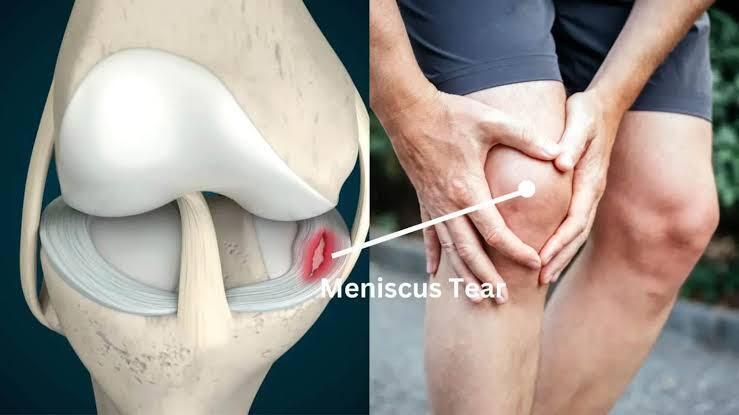
Each knee contains two menisci: the medial meniscus on the inner side and the lateral meniscus on the outer side.
These strong, fibrocartilage structures sit between the thigh bone and shin bone. They help distribute load, contribute to joint stability and assist the knee during walking, running and changes of direction.
Meniscal problems broadly fall into two categories.
Acute traumatic meniscal injuries
These usually occur during a specific incident, such as twisting on a planted foot during football, netball, rugby or skiing.
The injury may occur alongside damage to another structure, such as the anterior cruciate ligament.
Degenerative meniscal changes
These develop more gradually and are increasingly common through middle age and later life. The knee may become painful after a relatively ordinary movement, increased training or no obvious injury.
Degenerative changes found on imaging are not necessarily the sole cause of pain. The assessment must also consider joint sensitivity, strength, osteoarthritis, swelling and recent activity.
What does meniscal knee pain feel like?
Possible symptoms include:
- Pain along the inner or outer knee joint line
- Pain when twisting or changing direction
- Discomfort during a deep squat
- Stiffness or swelling
- Clicking, catching or crunching
- Difficulty fully bending or straightening the knee
- A feeling that the knee may give way
- Pain when rising from a low chair
- Symptoms after running or impact exercise
The NHS lists pain, swelling, movement restriction, giving way and clicking among the possible symptoms of a meniscus tear. However, these symptoms can also occur with ligament injuries, osteoarthritis, patellofemoral pain and other knee conditions. nhs.uk
Clinical tests can add useful information, but no single test confirms or excludes every meniscal injury. Your history, symptom location, swelling, movement and functional ability all need to be considered.
Does clicking mean the meniscus is torn?
No. Painless clicking is common and does not necessarily indicate significant damage.
More attention is required when clicking or catching is accompanied by:
- Joint-line pain
- Recurrent swelling
- Difficulty straightening the knee
- Instability or giving way
- Symptoms following a twisting injury
- Repeated interruption of normal activity
It is also important to distinguish stiffness from a genuinely locked knee.
A knee that feels stiff or painful but can still straighten is different from a knee that is mechanically blocked and cannot reach its normal position. A truly locked knee requires prompt medical assessment because displaced tissue may be obstructing movement.
Can you keep exercising with suspected meniscal pain?
Some people can remain active after appropriate modifications. Whether that is sensible depends on symptom severity, swelling, movement and the type of activity.
Continuing modified exercise may be reasonable when:
- Pain remains mild and stable
- The knee is not swelling repeatedly
- You can walk without a significant limp
- The knee is not locking or giving way
- Symptoms settle after activity
- The knee is no worse the following morning
Activities may need reducing when:
- Pain increases throughout the session
- Twisting produces sharp pain
- The knee becomes swollen afterwards
- You lose movement
- Your technique changes substantially
- Symptoms persist into the next day
- The knee feels increasingly unstable
Cycling, upper-body exercise and suitably modified resistance training can sometimes be maintained while running, jumping and rapid changes of direction are temporarily reduced.
How should gym training be modified?
Avoiding every leg exercise is rarely necessary, but painful movements should not simply be forced.
Useful temporary changes may include:
- Reducing squat depth
- Using a lighter load
- Avoiding loaded twisting movements
- Choosing a shallow split squat instead of a deep lunge
- Reducing running and impact volume
- Avoiding rapid changes of direction
- Using a bike if comfortable
- Leaving additional recovery time between leg sessions
These are temporary adjustments rather than permanent restrictions. The longer-term goal is usually to restore comfortable movement and rebuild the capacity required for normal training or sport.
What does meniscus rehabilitation involve?
Physiotherapy does not physically “push a tear back into place”. Rehabilitation aims to improve knee function, strength and tolerance while monitoring whether further investigation is required.
A personalised programme may include:
Restoring knee movement
Swelling and pain can reduce both knee bending and straightening. Early rehabilitation may focus on regaining comfortable movement without repeatedly aggravating symptoms.
Quadriceps and hamstring strengthening
The muscles surrounding the knee help absorb force and provide control. Exercises may include:
- Isometric knee extensions
- Seated knee extensions
- Bridges
- Hamstring curls
- Sit-to-stand exercises
- Leg press
- Squats or split squats
- Step-ups and step-downs
Exercise choice, range and load should be matched to the individual rather than following one generic meniscus programme.
Rebuilding single-leg control
Running and field sports involve repeated single-leg loading. Rehabilitation may progress towards:
- Single-leg strength exercises
- Balance and control work
- Hopping and landing
- Acceleration and deceleration
- Change-of-direction drills
- Sport-specific preparation
Return to sport should be based on movement, strength, swelling, symptoms and confidence—not solely on the number of weeks since pain began.
Does every meniscus tear require surgery?
No.
The appropriate treatment depends on whether the injury is acute or degenerative, the person’s age, the tear characteristics and whether the knee is mechanically blocked.
The NHS notes that some meniscal tears improve without surgery and that physiotherapy may be recommended to reduce pain and improve movement and strength. nhs.uk
For adults aged 45–70 with degenerative, non-obstructive meniscal tears, the ESCAPE randomised trial found that exercise-based physiotherapy was not inferior to arthroscopic partial meniscectomy for knee function at five years. This evidence relates to degenerative tears and should not be applied automatically to every acute sporting injury or locked knee. JAMA Network
Surgical or specialist assessment may be more relevant when:
- The knee is truly locked
- A significant acute tear is suspected
- There is an associated ligament injury
- Symptoms repeatedly cause mechanical obstruction
- Appropriate rehabilitation has not restored acceptable function
- Imaging findings would alter management
Do you need an MRI scan?
An MRI can identify meniscal and other internal knee changes, but it is not automatically required for every episode of joint-line pain.
Imaging may be considered when:
- The knee is mechanically locked
- There was substantial trauma
- A repairable acute tear is suspected
- Symptoms suggest associated ligament damage
- The diagnosis remains uncertain
- Progress is limited despite appropriate rehabilitation
- A consultant requires imaging for treatment planning
An MRI result should be interpreted alongside your symptoms and examination. Degenerative meniscal changes can be present without being the primary pain source.
When should knee pain be assessed urgently?
Seek urgent medical advice if:
- You cannot put weight through the leg
- The knee cannot bend or straighten
- It has changed shape following an injury
- There is marked swelling after trauma
- The knee is hot and swollen and you feel unwell
- You have numbness or tingling in the leg or foot
- Pain is severe or rapidly worsening
The NHS advises contacting urgent services for severe pain after injury, inability to walk, a hot swollen knee with fever or an inability to bend or straighten the leg. nhs.uk
Meniscus and knee physiotherapy in Amersham
At Whitson Wellness Physiotherapy, assessment of suspected meniscal knee pain may include:
- Reviewing how the symptoms began
- Checking for swelling and joint-line tenderness
- Assessing knee and hip movement
- Testing ligament stability where appropriate
- Measuring quadriceps and hamstring strength
- Observing squats, stairs and single-leg tasks
- Reviewing running, gym or sporting demands
- Deciding whether medical or imaging referral is advisable
Objective dynamometer testing can help identify and monitor strength differences between legs.
With access to the rehabilitation facilities at The Fit Club, treatment can progress from symptom management into gym-based strengthening, plyometrics and return-to-sport preparation.
Appointments are provided personally by Matt Whitson, an experienced Chartered Physiotherapist with a background in professional sport, NHS musculoskeletal care and private practice.
If knee pain, clicking or swelling is limiting your walking, training or sport, book a physiotherapy assessment with Matt in Amersham.
Whitson Wellness is based at The Fit Club, 16–18 Woodside Road, Amersham, with free parking, a private treatment room and full rehabilitation facilities.
Move well. Live well.
FAQs
Can a meniscus tear heal without surgery?
Some tears can improve with time and rehabilitation. The likelihood depends on the tear type, location, blood supply, age and symptoms.
Can I walk with a suspected meniscus injury?
Walking may be appropriate if you can do so comfortably without substantial limping or worsening swelling. Severe pain or inability to bear weight requires medical advice.
Are squats bad for a meniscus injury?
Not automatically. Squat depth, resistance and volume may need modifying. A shallower, controlled squat is often better tolerated during an irritable stage.
Does knee clicking mean I need an MRI?
No. Painless clicking alone does not automatically require imaging. Painful catching, recurrent swelling, true locking or persistent symptoms deserve assessment.
Is physiotherapy better than surgery?
For many degenerative, non-obstructive tears, exercise-based physiotherapy is an appropriate first treatment. Acute displaced tears and genuinely locked knees require separate specialist consideration.
How long does meniscus rehabilitation take?
Recovery varies with the injury, swelling, strength and activity goal. Progress generally occurs over weeks or months rather than after one appointment.

Matthew Whitson
Contact Me