Shoulder pain can turn familiar exercises into frustrating ones. Bench pressing may feel uncomfortable, lateral raises can produce a sharp catch and reaching overhead may become increasingly difficult.
You might also notice discomfort while working, driving, getting dressed or lying on the affected side.
A common question among active patients attending Whitson Wellness Physiotherapy in Amersham is:
“Do I need to stop training completely?”
In many cases, the answer is no. Training often needs to be modified, but complete rest is not automatically necessary. The right decision depends on how the pain started, its severity, the movements affected and whether there are signs of a more significant injury.
This article provides general guidance and cannot diagnose an individual shoulder problem. An assessment is advisable when symptoms persist, worsen or significantly affect movement.
What might be causing your shoulder pain?
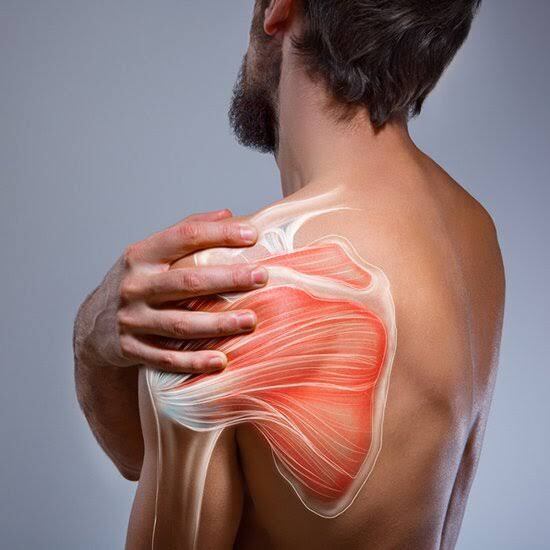
The shoulder relies on several joints, muscles and tendons working together. Pain during lifting may relate to the rotator cuff, biceps tendon, acromioclavicular joint, joint capsule or another structure.
One common presentation is rotator-cuff-related shoulder pain. Symptoms may include:
- Pain around the outside or front of the shoulder
- Discomfort when lifting the arm
- Pain during pressing or overhead exercises
- Symptoms when reaching behind your back
- Pain when lowering the arm
- Discomfort when lying on the affected side
- Reduced confidence or strength during lifting
Terms such as “impingement” and “tendinitis” are often used to describe shoulder pain. However, symptoms do not always arise from one structure being mechanically trapped or inflamed.
A useful physiotherapy assessment considers your movement, strength, training history and symptom behaviour rather than relying solely on a diagnostic label.
Can you continue exercising with shoulder pain?
Some people can continue training with appropriate changes. Others need a temporary break from specific exercises, particularly following a traumatic injury or when pain is severe.
Continuing modified training may be reasonable when:
- Pain remains mild and controlled
- You can move the arm through a useful range
- Your technique is not significantly altered
- Symptoms settle shortly after training
- The shoulder is not progressively worsening
- Everyday activities remain manageable
- You can find comfortable exercise variations
You should reduce the load or stop a particular exercise when:
- Pain becomes sharp or increasingly intense
- Strength suddenly gives way
- You substantially change your technique to compensate
- Symptoms remain aggravated into the following day
- Sleep is becoming progressively disrupted
- Shoulder movement is becoming increasingly restricted
- Each training session produces a greater reaction
The aim is not to prove that you can tolerate a painful movement. It is to maintain useful activity while giving the shoulder an appropriate opportunity to recover and rebuild capacity.
How can you modify upper-body training?
A painful shoulder does not necessarily require stopping every upper-body exercise. Small changes to load, range, grip and exercise selection can make training more manageable.
Reduce the weight temporarily
If an exercise is uncomfortable, reduce the resistance and assess whether you can complete it with controlled movement.
This is not a permanent reduction. It provides a starting point from which load can be rebuilt.
Adjust the range of movement
The deepest part of a bench press or the upper range of an overhead press may be particularly sensitive. Temporarily shortening the movement can help you retain strength while symptoms settle.
The range can then be increased gradually.
Change the exercise or grip
A dumbbell press with a neutral grip may feel different from a barbell press. A landmine press may be better tolerated than a strict overhead press. Rows can be adjusted by changing the angle, grip or elbow position.
There is no universally “shoulder-safe” variation. The best choice is one that matches your current tolerance and rehabilitation goal.
Avoid repeatedly testing the painful movement
Constantly checking whether the original exercise still hurts can keep irritating the shoulder. Follow a planned progression rather than testing maximum weight or painful end-range positions every session.
Keep training unaffected areas
Lower-body training, cardiovascular exercise and comfortable upper-body movements can often continue. Maintaining general activity can support both physical conditioning and confidence.
What exercises help rotator-cuff-related shoulder pain?
Current clinical guidance recommends an active rehabilitation programme as an initial treatment for rotator cuff tendinopathy. Exercise may involve resistance training, motor-control work and progressive loading matched to the individual. doi.org
A personalised shoulder programme might include:
- Isometric shoulder exercises
- External and internal rotation strengthening
- Rows and pulling movements
- Scapular control exercises
- Gradual pressing exercises
- Deltoid strengthening
- Exercises in increasingly elevated arm positions
- Work- or sport-specific loading
There is not one perfect rotator-cuff exercise for everybody. Exercise selection should reflect the painful movements, current strength and activities you want to resume.
For a tradesperson, rehabilitation may need to prepare the shoulder for repeated overhead work. A tennis player needs control at speed and above shoulder height. A gym user may need a structured progression back to pressing, pulling and loaded carries.
Is more physiotherapy always better?
Not necessarily. The quality of the assessment, advice and rehabilitation plan matters more than simply accumulating appointments.
The UK GRASP trial compared a progressive exercise programme with a best-practice advice session for adults with rotator-cuff disorders. The longer supervised programme was not superior for shoulder pain and function over 12 months. This suggests that clear advice, an appropriate exercise plan and good self-management can be highly valuable. The same trial found that corticosteroid injections offered modest short-term benefit but no long-term benefit. pubmed.ncbi.nlm.nih.gov
Some patients need closer supervision because their symptoms are complex, strength deficits are substantial or their goals involve demanding work or sport. Others progress well with fewer appointments and a clearly structured programme.
At Whitson Wellness, follow-up frequency is based on clinical need rather than using an identical schedule for everyone.
Do you need an ultrasound or MRI scan?
An immediate scan is not routinely required for most non-traumatic shoulder pain.
Assessment of your symptoms, movement and strength can often guide initial management. Imaging becomes more relevant when:
- Symptoms followed significant trauma
- A substantial tendon tear is suspected
- There is marked or progressive weakness
- The diagnosis remains unclear
- Symptoms have not improved with appropriate rehabilitation
- Imaging would change the treatment plan
- Surgical or specialist review is being considered
The 2025 rotator-cuff tendinopathy guideline advises against routine initial imaging and recommends considering it when symptoms have not improved following appropriate non-surgical management. jospt.org
Scan findings also need clinical context. Structural changes do not always explain the severity of pain or determine what you can safely do.
When should shoulder pain be assessed urgently?
Seek urgent medical advice if:
- You develop sudden, severe shoulder pain
- You cannot move your arm after an injury
- The shoulder has visibly changed shape
- There is significant swelling after trauma
- You have persistent pins and needles or loss of sensation
- The arm feels unusually hot or cold
- You feel feverish or generally unwell
- Shoulder or left-arm pain occurs with chest pain or jaw pain
The NHS advises seeking medical help when shoulder pain is worsening, has not improved after two weeks or the arm is very difficult to move. nhs.uk
How shoulder physiotherapy in Amersham can help
At Whitson Wellness Physiotherapy, your shoulder assessment may include:
- Discussing how the symptoms began
- Reviewing work, gym and sporting demands
- Assessing shoulder and neck movement
- Testing rotator-cuff and deltoid strength
- Comparing the affected and unaffected sides
- Examining pressing, pulling or overhead movement
- Screening for symptoms requiring medical referral
- Establishing measurable rehabilitation goals
Objective dynamometer testing can be used where appropriate to measure strength and monitor differences between sides.
Treatment may combine education, activity modification, hands-on treatment and a personalised strengthening programme. Access to the full rehabilitation facilities at The Fit Club allows exercises to progress from early shoulder loading into gym-based rehabilitation and return-to-sport preparation.
Appointments are provided personally by Matt Whitson, an experienced Chartered Physiotherapist with a background in professional sport, NHS musculoskeletal care and private practice.
The key message
Shoulder pain does not always mean you must stop training completely. It does mean that repeatedly forcing painful exercises without understanding the problem may not be helpful.
The best approach is usually to identify tolerable movements, adjust the current training demand and progressively rebuild the strength required for work, sport or the gym.
If shoulder pain is affecting your training, sleep or daily activities, book a physiotherapy assessment with Matt at Whitson Wellness in Amersham.
The clinic provides private one-to-one physiotherapy at The Fit Club, 16–18 Woodside Road, Amersham, with free parking, a private treatment room and full rehabilitation facilities.
Move well. Live well.
FAQs
Can I train through shoulder pain?
Possibly, if symptoms remain mild, your movement is not significantly altered and the shoulder settles afterwards. Sharp, worsening or persistent pain should not simply be ignored.
What is the best exercise for rotator-cuff pain?
There is no single best exercise. Rehabilitation may include rotation, pulling, pressing and overhead exercises selected according to your symptoms, strength and goals.
Should I avoid overhead pressing?
Not necessarily forever. Overhead pressing may need temporary modification before being gradually reintroduced as movement and strength improve.
Does painful shoulder clicking mean something is torn?
No. Clicking can occur without significant injury. Clicking accompanied by pain, weakness, instability, locking or a traumatic incident should be assessed.
Do I need an MRI for shoulder pain?
Most non-traumatic shoulder pain does not require an immediate MRI. Imaging may be appropriate following significant trauma, marked weakness or failure to improve with suitable rehabilitation.
How long does shoulder rehabilitation take?
Recovery varies according to the diagnosis, symptom duration, strength deficits and activity demands. Improvement commonly occurs over weeks or months rather than after one treatment.
Where can I see a shoulder physiotherapist in Amersham?
Whitson Wellness provides private shoulder assessment and rehabilitation at The Fit Club on Woodside Road in Amersham.

Matthew Whitson
Contact Me